


Milk pitchers (or milk jugs) might look similar at first glance, but differences in size, spout shape, pitcher design, and handle can significantly change how you steam milk and control your pour.
Therefore, the best milk pitcher isn't necessarily the most expensive or the largest. It’s the one that suits the amount of milk you use, the steam wand power of your espresso machine, and your latte art skill level. In this guide, we'll explain how to choose the right milk frothing pitcher and the differences between various sizes and designs.
What is a Milk Pitcher?
A Milk Pitcher is the jug used with an espresso machine's steam wand to heat milk and create the microfoam used in drinks like lattes, flat whites, and cappuccinos.
But its role doesn't end with steaming! Once you achieve the right milk texture, the pitcher becomes a pouring tool. This is where the spout shape and pitcher design become crucial if you want to learn latte art.
How to Choose Your Milk Pitcher Size?
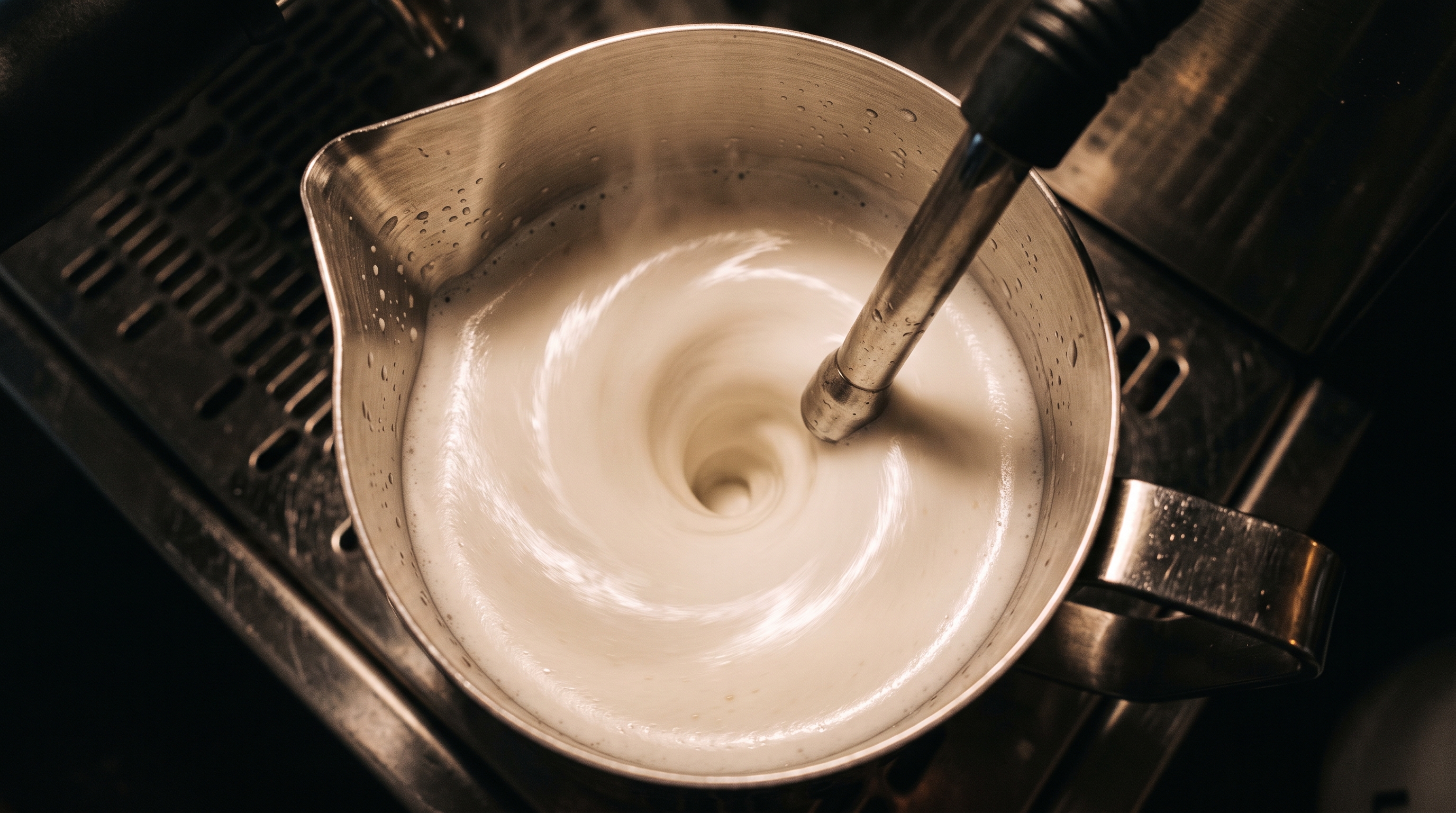
Size is one of the first things to determine before buying. Choosing a pitcher that is too large for a small amount of milk makes it difficult to create a vortex and control the milk. Conversely, overfilling a small pitcher leaves no room for the milk to expand during steaming.
350 ml Pitcher (Small)
A great choice if you mostly prepare one small drink at a time. The small size makes controlling the milk volume easier, making it ideal for home use.
500–600 ml Pitcher (Medium)
The most versatile size for daily use, especially for medium and large milk beverages. It gives you enough space for milk expansion and smooth vortex creation.
900 ml and Above (Large)
Best suited for cafes and commercial environments that need to prepare multiple drinks simultaneously.
Your Steam Wand's Power is Crucial!
If you use a small home espresso machine with slow, gentle steam power, avoid large pitchers (like 600 ml) because the steam won't be strong enough to create a "vortex" in that wide space. In this case, a 350 ml pitcher will be a lifesaver for your machine.
Don't Choose Size Based on Your Cup Capacity Alone!
If your latte cup is 300 ml, it doesn't mean you need a 300 ml pitcher. Milk expands and increases in volume during steaming, and you need empty space in the pitcher to roll the milk without spilling. Always consider the "space required for the vortex" rather than just the final drink volume.
Does the Spout Shape Affect Latte Art?
Absolutely, when practicing latte art, the professional difference between pitchers becomes apparent:
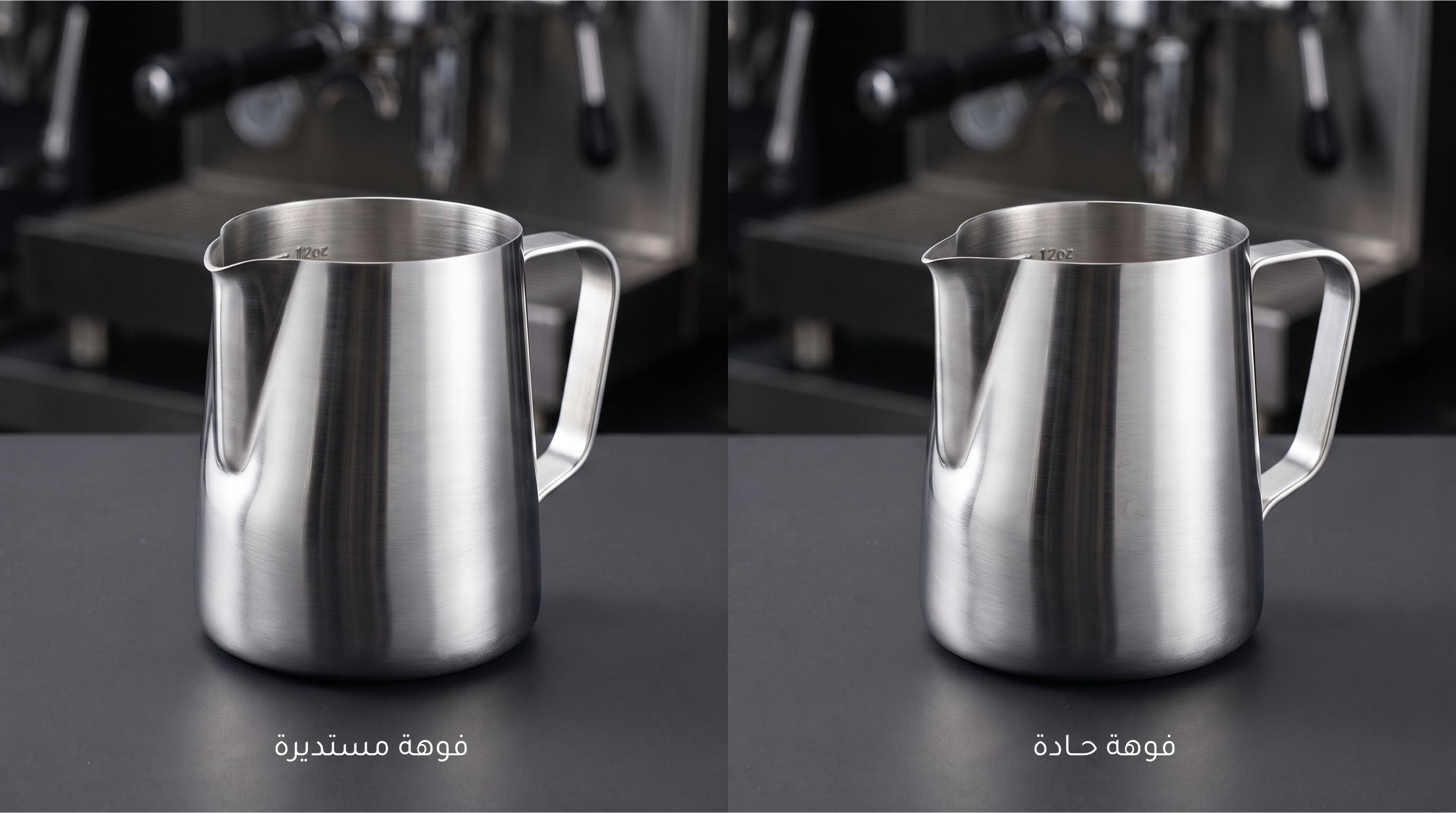
Round or Wide Spout
Allows for a larger milk flow, making it very comfortable for basic pours and classic patterns. If you are learning to pour a heart or a simple tulip, this spout is perfect for you.
Sharp and Narrow Spout
Gives you extremely high control over the pouring path, especially useful when trying to draw fine lines and complex details (like a swan design).
Always Remember: Milk texture is more important than spout shape! If your foam separates from the milk, not even the most expensive pitcher in the world can save you. Proper steaming is the foundation.
Handle or Handleless Pitcher?
A pitcher with a handle is classic and familiar, providing stability and keeping milk heat away from your hand. A handleless pitcher, on the other hand, allows you to grip the body directly, giving some baristas more freedom and wrist flexibility to change the pouring angle easily.
Top Milk Pitcher Brands
If you're looking for excellence, these are the most reliable names in the specialty coffee world:
Barista Space: The choice of champions! Known for their lightweight build, stunning colors, and sharp spouts that help draw the finest details.
Rhino Wares: A symbol of strength and durability. Famous for their practical products, specifically their easy-to-clean, non-stick Teflon-coated pitchers.
Tache: Elegance and high value. Modern designs (including handleless pitchers) with excellent build quality at affordable prices.
Quick Summary: Which Pitcher Suits You?
Common Buying Mistakes
Buying the largest size just in case: It makes you waste milk and makes steaming small amounts very difficult.
Focusing on the spout and forgetting the size: The spout is for pouring, but the pitcher size determines the success of the "steaming" process itself.
Believing the tool creates miracles: A professional pitcher won't fix poor steaming technique. Master milk texturing first, then enjoy the pitcher's performance!