
An espresso basket (filter basket) might look like a small piece of metal inside your portafilter, but it directly affects water flow through coffee grounds and the quality of your extraction.
When shopping for a basket, you'll encounter various options: sizes like 51mm, 54mm, and 58mm; Pressurized vs Non-Pressurized designs; Precision Baskets; Ridged vs Ridgeless sides; top brands like IMS and VST; and capacities ranging from 15g, 18g, to 20g.
How to find the right basket for your machine and coffee?
Quick Rule: Ensure the basket is compatible with your espresso machine and portafilter first. Then, select the capacity for your dose, and choose the basket design based on your coffee roast level and grind size.
Browse Espresso Baskets Available
What is an Espresso Basket?
An espresso basket is the perforated metal cup inside the portafilter that holds ground coffee before extraction.
Water flows from the group head through the coffee puck, then through the basket holes into your cup. Therefore, the basket’s dimensions, shape, capacity, and hole design are integral to the extraction process.
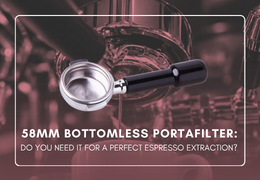
Important Note: The portafilter and basket are not the same thing. The portafilter is the whole handle assembly you lock into the machine, while the basket is the metal insert inside it. This distinction matters when shopping, as you often only need to upgrade the basket.
How to Choose the Right Espresso Basket
Before considering brands or prices, focus on these four key aspects:
Compatibility & Size (51mm, 54mm, 58mm)
Basket Capacity & Dose (in grams)
Pressurized vs Non-Pressurized
Manufacturing Precision & Profile (Precision vs Ridged vs Ridgeless)
1. Espresso Basket Sizes: 51mm, 54mm, or 58mm?
One of the first specifications you'll notice when buying a new basket is numbers like 51mm, 54mm, and 58mm.
Comparing popular espresso basket sizes: 51mm, 54mm, and 58mm
Size | Common Usage | What to Check Before Buying? |
|---|---|---|
51 mm | Found on many entry-level home machines | Check your specific machine model |
54 mm | Used in several home espresso systems (e.g., Breville) | Check portafilter depth & compatibility |
58 mm | Standard on commercial and prosumer machines | Don't rely on diameter alone |
2. What is the Difference Between Pressurized and Non-Pressurized Baskets?
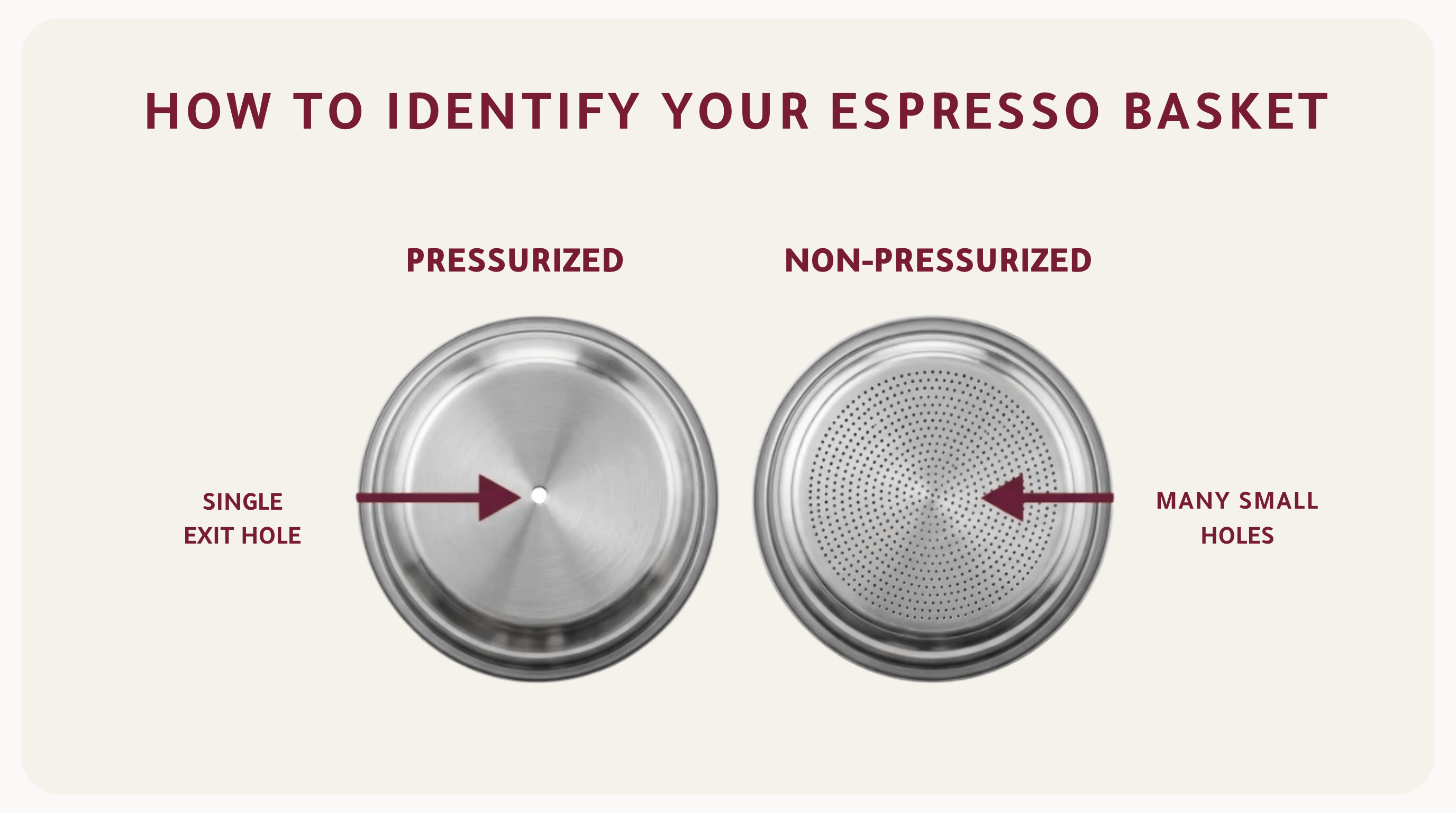
Quick test: Holding the basket up to the light reveals a single exit hole on pressurized baskets versus multiple micro-holes on non-pressurized baskets.
Pressurized Basket (Dual Wall): Features two walls; the inner wall has multiple holes, while the bottom outer wall has only one single exit hole to artificially create pressure. This creates a thick foam (crema) even with pre-ground coffee or inconsistent grinds and tamping.
Non-Pressurized Basket (Single Wall / Open Basket): Made of a single layer with a full grid of micro-holes exposed at the bottom. Water resistance and extraction rely entirely on your coffee grind size, tamping quality, and puck distribution. It is the preferred choice for coffee enthusiasts aiming for full control over extraction flavor.
3. Advanced Basket Types: Precision, Ridged, and Ridgeless
Modern espresso manufacturing offers high-precision baskets that significantly improve extraction consistency:
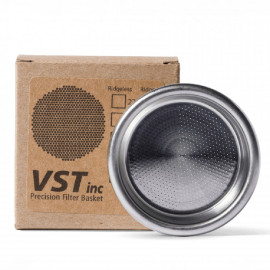
Precision Baskets (e.g., VST and IMS): Manufactured with laser-cut holes that are uniform in size with zero burrs or imperfections. You can order VST precision baskets from Qavashop for a flaw-free extraction performance.
Ridged vs Ridgeless: Ridged baskets have an indented ridge around the outer wall to hold the basket securely inside the portafilter when knocking out spent pucks. Ridgeless baskets have smooth sidewalls for easy removal and fast swapping by hand.
High-Extraction Baskets: Next-generation baskets with micro-holes spanning across the entire base to maximize flow rates and flavor extraction.
Extraction Science: How Holes, Roast Levels, and Grind Size Impact Your Basket
First: How Does Hole Count and Size Affect Extraction?
The total hole count and Total Open Area (TOA) at the bottom of the basket dictate water flow speed and uniformity through the coffee puck:
More holes & wider distribution (e.g., VST & High-Extraction): Reduces water flow resistance caused by the metal itself, ensuring water travels evenly through all coffee grounds. This boosts extraction yield and minimizes channeling issues.
Fewer holes or center-concentrated holes: Creates higher resistance at the bottom, which can pool extraction in the center and increase unwanted bitterness.
Second: Grind Size Adjustments Based on Basket Type
The more precise and open a basket is, the more you will need to adjust your coffee grinder settings:
• VST & Precision Baskets: Require a finer grind compared to stock factory baskets. Because precise VST holes allow water to pass with less resistance, machine pressure depends entirely on coffee puck resistance.
• High-Extraction Baskets: Require the finest grind setting possible without choking, reaching peak flavor extraction.
• Pressurized Baskets: Can handle coarser grinds thanks to the artificial pressure wall at the bottom.
Third: Matching Coffee Roast Levels to Your Basket
The roast level of your coffee beans affects density and solubility, making certain baskets more suitable:
Light Roast
Light roasts are dense and harder to extract. The best match is a Precision Basket (like VST), which allows fine grinding and fast flow without clogging, unlocking fruity acidity and sweetness without harsh bitterness.
Medium Roast
Solubility is well-balanced. Standard Non-Pressurized baskets or 18g VST baskets work great here, offering a pleasant balance of body and flavor complexity.
Dark Roast
Dark roast beans are porous and extract quickly. Standard baskets or lower-hole-count baskets work best to prevent over-extraction and bitter, burnt flavors.
What is a Blind Basket? Can It Be Used for Brewing?
No!
A Blind Basket is a solid metal disk with no holes, and no coffee grounds should ever be placed in it. Its sole purpose is for backflushing your espresso machine to clean the group head and internal valves from coffee oils.
Watch: How to Clean Your Espresso Machine Using a Blind Basket
Quick Summary Table for Choosing a Basket
Coffee Type / Use Case | Recommended Basket | Required Grind Size |
|---|---|---|
Pre-ground coffee / Basic home grinder | Pressurized (Dual Wall) | Medium to relatively coarse |
Light roast + Fruity acidity notes | Precision Basket (e.g., VST) | Very fine (Finer) |
Dark roast / Classic bold espresso | Standard Non-Pressurized Basket | Balanced fine grind |
Fast basket swaps on bottomless portafilters | VST Ridgeless Basket | Adjust based on recipe |
Routine machine cleaning (Backflush) | Blind Basket (Matching size) | No coffee (Solid metal) |
Frequently Asked Questions (FAQ)
Does a blind basket need to match my portafilter size?
Yes, absolutely. A blind basket must match your portafilter size exactly (e.g., 58mm for 58mm portafilters) to create a tight seal against the shower screen and prevent leaks during backflushing.
Why does my espresso shot run too fast after upgrading to VST?
VST baskets have precisely engineered holes with minimal flow resistance, allowing water to pass through faster. Simply adjust your grinder to a finer setting until you hit your ideal extraction time.
What is the difference between Ridged and Ridgeless VST baskets?
Ridged baskets feature an indent on the outer wall that snaps into the portafilter spring to prevent falling out during knocking. Ridgeless baskets have smooth walls, making them easier to pop out and swap quickly by hand.
Summary:
Choose your basket step-by-step:
Verify machine & portafilter size → Determine dose & roast level → Select basket type (VST for light/medium roast, or Standard) → Dial in your grind size for the new basket.