

Salty Coffee: From Turkish Engagement Traditions to Your Espresso Cup!
Have you ever tried adding salt to your coffee instead of sugar? It might seem like a strange idea at first, but "salty coffee" isn't just a coincidence or a brewing mistake; it is an authentic part of Turkish engagement traditions carrying deep social meanings. It doesn't stop at old customs either—modern science says a pinch of salt might be the secret to reducing coffee bitterness and highlighting its true flavor!
This custom recently gained widespread fame thanks to the Turkish series "Tuzlu Kahve" (Salty Coffee), but the roots of the story go much further back. So, what is the origin of the story? And could salt be a secret addition to your espresso cup?
Salty Coffee in Quick Points:
Origin: An ancient Turkish tradition associated with marriage proposal ceremonies.
Meaning: In the past, it was a subtle expression of rejection; today, it has become a fun test of the groom's patience!
Effect of Salt: Scientifically, salt reduces our perception of bitterness and balances flavors.
How to try it: A very small pinch of salt in Turkish coffee or espresso can enhance the flavors.
What is the story of salty coffee in Turkish engagement traditions?
Coffee is an essential pillar of Turkish hospitality, specifically in the marriage proposal ceremonies known as "Kız İsteme". When the groom and his family come to ask for the bride's hand, she prepares coffee for the guests, but the groom's cup hides a surprise: salt instead of sugar!
Historical accounts of this tradition vary. Some believe it was a polite way for a girl in the past to express her unwillingness to marry the suitor, especially in societies that restricted women's freedom to express rejection. Today, however, this ritual has turned into a lighthearted test of the groom's endurance and patience; drinking the salty cup without complaining is considered definitive proof of his love, respect, and commitment to his bride.
Cultural Note: UNESCO added Turkish coffee culture and traditions to the Representative List of the Intangible Cultural Heritage of Humanity in 2013. You can find more details about the roots of this custom in the Habertürk report on salty coffee, or learn how to make it authentically through our guide on how to make Turkish coffee at home.
How to Make Salty Turkish Coffee
The preparation method does not differ much from classic coffee; the whole secret lies in replacing sugar with salt. To prepare one cup, you will need:
Ingredient | Suggested Amount |
|---|---|
Turkish coffee (very finely ground) | 1 heaping teaspoon (about 7 grams) |
Cold water | Approx. 70 ml |
Salt | A very small pinch (to taste) |
Mixing ingredients: Add the cold water, Turkish coffee, and salt to the cezve (ibrik), and stir it only once to distribute the ingredients.
Gentle heating: Place the cezve on low heat and let it heat gradually without any additional stirring.
Saving the foam: When the foam starts to rise, immediately remove the cezve from the heat and pour some of the foam into the cup.
Final pour: Return the cezve to the heat for a few seconds until the foam rises again, then gently pour the rest of the coffee into the cup to be served with a glass of water.
Note: If you are preparing it to taste the flavor and not as a marriage ritual, start with a very tiny amount of salt. For perfect and consistent results, you can rely on a Turkish coffee maker to adjust the temperature and foam automatically.
Salted Espresso: Qavashop's Experiment
Combining salt and espresso might sound crazy, but it's worth trying. Salt doesn't just make coffee salty; it manipulates how our senses perceive bitterness. To see the effect of this, we conducted a practical experiment at Qavashop:
Watch the experiment: Have you ever tried espresso with salt?
Experiment Details:
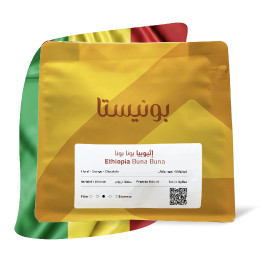
Coffee Bean Used | |
Grinder | |
Grind Setting | Number 1 |
Coffee Dose | 18 grams |
Salt Amount | 3 grams (Way too much!) |
Extraction Time | 35 seconds |
The Result? Although the extraction took 35 seconds, using 3 grams of salt was excessive, and the saltiness completely overpowered the beverage. The experiment proved that salt is a double-edged sword; a tiny amount balances the flavor, while an excess ruins it completely.
How to better add salt to espresso?
We always recommend adding salt after extraction, not with the coffee grounds in the basket:
Prepare the espresso as usual without additions.
Add a very small pinch of fine salt to the cup and stir.
Taste; if you feel the need to reduce the bitterness further, add another tiny pinch gradually.
(To explore professional equipment, browse the espresso machines and espresso grinders available at Qavashop).
Why does salt reduce coffee bitterness?
It's not magic, it's chemistry! The sodium in salt interferes with the way our taste receptors react to bitter compounds.
Scientific Evidence: A study published in the journal Nature in 1997 showed that sodium chloride suppresses the perception of certain bitter flavors and enhances sweetness. Read the scientific study here.
When applying this principle to coffee, a pinch of salt is not meant to make the coffee salty, but rather to suppress the sharp bitterness, allowing hidden flavors and other notes to emerge clearly. However, always remember that salt is not a magic cure for a bad extraction, as specialty coffee from different origins has its own distinct character.
(For a deeper understanding of the differences, check out our article: The difference between Turkish coffee and espresso).
Frequently Asked Questions about Salty Coffee
What is salty coffee?
It is coffee with salt added instead of sugar. It is particularly associated with Turkish engagement traditions, where the bride serves the groom a cup of coffee with salt.
Why does the bride serve salty coffee to the groom?
It is a tradition to test the groom's patience and tolerance, and in the past, it was sometimes used to politely express rejection of the groom.
Can salt be added to espresso?
Yes, and it is recommended to add a very small pinch after extraction to adjust the taste without affecting the extraction process itself.
Does salt actually reduce coffee bitterness?
Yes, taste research indicates that sodium reduces the perception of bitter flavors, but it does not fix bitterness caused by severe brewing mistakes or burnt beans.
Is drinking salty coffee harmful?
The amounts used to adjust the flavor (a simple pinch) are usually harmless, but excessive use is not recommended, especially for those on low-sodium diets.
Conclusion
Salty coffee is more than just a weird drink; it is a fascinating blend of ancient heritage and modern tasting chemistry. Whether you are a groom facing the engagement test or a connoisseur looking for the perfect cup of espresso free of sharp bitterness, the experience is worth exploring. Just remember that moderation is key.
Have you ever tried coffee with salt? Share your experience and the amount you found most suitable in the comments!