
Coffee Calibration is one of the most important skills that helps you brew a balanced cup and achieve consistent results every time. Even with excellent coffee beans and professional equipment, the flavor of your coffee can vary significantly if the grind size is not suited to your brewing method.
Calibration is not just about setting your coffee grinder once; it is an ongoing process that requires monitoring extraction time, coffee yield, water volume, and grind size. You then make gradual adjustments to achieve the result that best suits your specific coffee beans and brewing method.
In this guide from Qavashop Academy, we will review how to calibrate coffee grinds for both espresso and filter (drip) coffee. We will also explain the impact of grinder quality and grind particle distribution, featuring practical experiments comparing results from different grinders.
1. What is Coffee Calibration (Dialing In)?
Coffee calibration is the process of adjusting the fineness or coarseness of your ground coffee to achieve a balanced, repeatable extraction. It relies on observing extraction time, the weight of the resulting coffee, and the coffee-to-water ratio, then incrementally adjusting the grind size according to your brewing method.
In the espresso world, this process is also known as Dialing In, which refers to adjusting your grinder settings and recipe to find the sweet spot for each specific coffee bean.
For example, when brewing espresso, you might start with a dose of 18 grams of coffee to yield 36 grams of extracted espresso, aiming for a 1:2 ratio. If the extraction finishes too quickly and the taste is sour and unbalanced, you may need to grind finer to increase water resistance and slow down the flow.
Conversely, if the extraction is very slow and the taste is bitter or dry, you may need to grind coarser to reduce water resistance.
The goal of calibration is not simply to hit a specific target time, but to achieve a balance between extraction time, taste, body, and flavor.
2. How to Calibrate Espresso Grinds: Practical Steps
Espresso calibration differs from other brewing methods because water passes through the coffee puck under pressure. Therefore, the grind size and particle distribution directly dictate the water's flow resistance.
This is where the grinder and espresso machine work together:
Coffee Grinder: Controls the grind size and the distribution of coffee particles, thus determining the coffee puck's resistance to water.
Espresso Machine: Provides hot water and controls the extraction pressure based on its settings and design.
Espresso Calibration Steps
Step 1: Find a Starting Point on the Grinder
Start with a grind setting suitable for espresso according to the manufacturer's recommendations. The adjustment mechanism varies from one model to another, so do not assume the zero point or the numbers are identical across all grinders.
Avoid turning the burrs until they rub together without consulting the manufacturer's instructions.
Step 2: Lock in Your Coffee Dose
Use an accurate scale to determine the amount of ground coffee you will place in the portafilter.
You can start with an 18-gram dose, keeping in mind the capacity of your specific espresso basket.
Step 3: Target the Yield Weight
Use a scale to monitor the weight of the resulting espresso rather than relying on volume (milliliters); because the crema affects the apparent volume of the beverage.
Example of a starting recipe:
Coffee dose: 18 grams.
Espresso yield: 36 grams.
Brew ratio: 1:2.
Extraction time: 25–30 seconds as a baseline for testing.
These are not mandatory numbers; you may need to adjust them based on the coffee origin, roast level, and the result you are looking for.
Step 4: Evaluate Extraction and Adjust the Grind
Monitor the extraction time and taste together:
If the flow is fast and the taste is sour and unbalanced, try grinding finer.
If the flow is very slow and the taste is bitter or dry, try grinding coarser.
If the flow is appropriate but the taste is unbalanced, review your dose, brew ratio, water temperature, and other variables before changing the grind size again.
Step 5: Repeat the Experiment
Continue adjusting the grind size gradually until you reach the desired sensory result.
Make sure to keep the dose, beverage yield, and other variables as constant as possible so you know the exact impact of each adjustment.
A Practical Experiment by Qavashop Academy
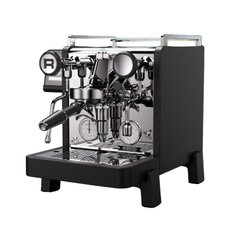
In an applied experiment at Qavashop Academy, we used the Rocket R58 machine and the Eureka Mignon Single Dose Pro grinder to brew Indonesia Bayu beans roasted by Bean To Roast.
The recorded results were as follows:
Test 1: Coarser Grind
The grinder was set to 8, resulting in:
Extracted yield: 38 ml.
Extraction time: 23 seconds.
The flow was relatively fast, so the grind setting was adjusted to be finer.
Test 2: Finer Grind
The grind setting was adjusted one notch past number 6, resulting in:
Extracted yield: 35 ml.
Extraction time: 32 seconds.
The experiment demonstrated how changing the grind size affects the flow rate and extraction time of the coffee.
It is important to note that the original measurements were recorded in milliliters; therefore, it cannot be considered an accurate reference recipe without knowing the dose weight and beverage yield in grams. Furthermore, judging the final quality requires tasting, not just looking at time and volume alone.
3. Calibrating Filter Coffee Grinds
Filter (pour-over) coffee differs from espresso in the extraction method; it relies on water passing through the coffee grounds via gravity, without the pressure of an espresso machine.
Therefore, adjusting the filter grind size does not depend solely on the grind setting, but is also affected by several factors, including:
Water temperature.
Pouring speed and technique.
Number of pours (pulses).
Coffee and water quantities.
Brewer design and the filter used.
Coffee particle size distribution.
Key Variables Influencing Filter Extraction
Variable | Impact on Extraction | How to Manage It |
|---|---|---|
Grind Size | Finer grinds generally increase flow resistance, while coarser grinds decrease it | Adjust the grind gradually based on flow and taste |
Pouring Speed | Affects water agitation, turbulence, and extraction evenness | Use a steady, consistent pour |
Water Temperature | Affects the rate at which soluble compounds are extracted | Adjust according to the roast and origin |
Fines (Coffee Dust) | Can accumulate and clog water flow through the filter | Choose a grinder with a suitable particle size distribution |
Coffee & Water Dose | Affects the brew ratio and beverage concentration | Keep the ratio fixed when conducting experiments |
1. Grind Size and Brew Time
Grind size affects water resistance as it passes through the coffee bed.
Coarse Grind: Allows water to pass more easily, which may result in under-extraction if contact time is too short.
Fine Grind: Increases flow resistance and may unnecessarily prolong brew time if it's too fine.
You can start with a brew time of 2.5 to 3.5 minutes for many filter recipes, but it is not a fixed standard for all brewers and coffees.
If the brew finishes quickly and tastes sour and unbalanced, try grinding finer. Conversely, if it takes a long time and a harsh bitterness or dryness appears, try a coarser grind.
2. Pouring Speed
Pouring speed doesn't just depend on grind size; it is also influenced by the brewing technique, number of pours, the height of the kettle, and water turbulence within the brewer.
Aggressive pouring can increase the agitation of coffee particles, including fines, which may cause them to migrate and clog the flow.
Therefore, it is best to maintain a steady pour and control agitation, adjusting the grind size first when you need to change flow resistance.
3. Water Temperature
Water temperature plays an important role in the extraction rate of soluble compounds from the coffee.
You can start with a temperature between 90 and 96°C for many filter recipes, then adjust it based on roast profile, bean origin, and sensory results.
Raising the temperature can help increase extraction when the coffee is under-extracted.
Lowering the temperature can help decrease extraction in recipes that exhibit undesirable bitterness or astringency.
There is no single ideal temperature for all coffees; therefore, it's best to experiment with gradual adjustments.
4. What is the Impact of Fines on Coffee Extraction?
Fines are very small particles produced during the grinding of coffee beans. Their quantity and distribution vary based on grinder design, burr geometry, and operating settings.
These particles affect water behavior during extraction, but their impact differs between espresso and filter coffee.
Fines in Espresso
Fine particles are part of the overall ground coffee size distribution and contribute to resisting water flow through the puck.
However, an increase in fines is not always positive; excess fines or poor distribution can lead to an unbalanced flow or uneven extraction (channeling).
Fines in Filter Coffee
In pour-over coffee, some fine particles may migrate to the bottom of the filter bed and gather near the exit holes.
This can lead to:
Slowing down water flow.
Increasing brew time.
The appearance of a muddy silt layer.
Affecting beverage clarity and mouthfeel.
However, the presence of some fines is entirely normal and does not necessarily mean the grinder is of low quality. Therefore, choosing a grinder is not about reducing fines to zero, but rather obtaining an appropriate particle size distribution that suits your brewing method.
5. A Practical Comparison: DF54 vs. Eureka Zero
To understand the impact of different grind particle distributions, Qavashop Academy conducted a comparison experiment between two grinders: the DF54 and the Eureka Zero, using the exact same beans and recipe.
Experiment Recipe
Coffee Beans: Ethiopian Guji, from W Roasters.
Coffee Dose: 20 grams.
Water Volume: 300 grams.
Water Temperature: 90°C.
Target Time: 3 minutes and 30 seconds.
Pouring Steps
The water volume was distributed in four stages:
First pour: 30 grams to bloom the coffee.
Second pour: Up to 120 grams.
Third pour: Up to 220 grams.
Fourth pour: Up to 300 grams.
Comparison Results
Despite very similar brew times between the two grinders, a visible difference was noted in the coffee bed remaining inside the filter:
DF54 Grinder
Showed a thicker, denser layer of fine silt on the surface of the coffee bed inside the coffee filter, which may correlate with the particle distribution profile and the volume of fines generated.
Eureka Zero Grinder
Showed a visibly cleaner bed with less clumping in the filter compared to the other grinder in this specific test.
What Do We Learn from the Experiment?
The comparison demonstrates that achieving similar brew times does not necessarily mean you have identical grind particle distributions.
Fines production and overall particle sizing can vary significantly between grinders, even when the drawdown time is matched.
Nevertheless, simply observing the filter bed is not enough to judge cup quality; the comparison must be completed by tasting the coffee to evaluate clarity, sweetness, acidity, and body.
6. When Do You Need to Recalibrate Your Coffee Grinder?
Grinder calibration is not a one-time operation done at purchase. You may need to make periodic adjustments based on environmental conditions and the nature of the coffee beans.
The most prominent scenarios requiring recalibration include:
1. Changing the Coffee Bean Origin
Every specialty coffee requires a different grind size for a balanced extraction, even if both coffees are from the same roaster.
2. Changing Age of Coffee Beans
The properties of beans change over time as they age past roast date (degassing), meaning you will likely need to adjust the grind size to maintain your desired results.
3. Changing Environmental Conditions
Humidity and ambient temperature affect the behavior of coffee during grinding and extraction, especially in cafe environments where conditions shift throughout the day.
4. Grinder Cleaning and Maintenance
Cleaning the grinder or swapping burrs may alter the zero point or grinding behavior, making it crucial to verify your settings post-maintenance.
5. Drifting Extraction Results
If you notice a change in extraction time or flavor despite using the exact same recipe, recalibration is likely necessary.
7. How Do You Choose the Right Coffee Grinder?
Choosing a coffee grinder depends on the brew method you primarily use and the results you seek.
If you prefer Espresso:
Look for a grinder that provides a precise, micro-adjustable range in the fine spectrum, allowing you to make small, repeatable tweaks for balanced flow.
If you prefer Filter Coffee:
Look for a grinder designed for a highly uniform particle distribution, limiting boulders (chunks) and excess fines.
If you brew both Espresso and Filter:
An all-purpose grinder might be a convenient choice, but it is important to review real-world performance for both methods, because simply being able to grind across the full spectrum does not guarantee the same quality results as specialized, single-purpose grinders.
Ultimately, choosing a grinder is not just about the number of settings or aesthetics, but about grind quality, particle consistency, and ease of dialing in for your personal brewing style.
Conclusion
Calibrating coffee grinds is an essential skill for anyone who cares about brewing balanced, consistently high-quality coffee.
Whether you are making espresso or filter coffee, understanding the relationship between grind size, extraction time, and water temperature empowers you to take control of the final result rather than relying on guesswork.
Start with a clear recipe, lock in as many variables as possible, then adjust your grind size gradually while evaluating the taste in each iteration.
And remember, the best calibration is not necessarily the one that hits a specific target time, but the one that yields a balanced cup reflecting the unique character of the coffee beans you are using.
Frequently Asked Questions about Coffee Calibration
1. How do I adjust the grind size for espresso?
Start by locking in your coffee dose and target espresso yield, then monitor extraction time and taste. For instance, start with 18 grams to yield 36 grams of espresso, a 1:2 ratio.
If the flow is too fast and tastes sour/unbalanced, try grinding finer.
If the flow is very slow and tastes bitter/dry, try grinding coarser.
Adjust incrementally while keeping other variables constant.
Remember that 25–30 seconds is a common starting point for experiments, not an absolute rule for all beans and recipes.
2. What is the difference between filter and espresso grinders?
The primary difference lies in the burr geometry and the resulting particle size distribution.
Espresso Grinders: Engineered to produce fine, unimodal or specifically bimodal grinds suited to create puck resistance against pressurized water.
Filter Grinders: Aim for a highly uniform distribution of coarser particles, minimizing the fines that could stall water flow and muddy the cup.
All-Purpose Grinders: Can handle both methods, but their performance and consistency vary depending on burr design and current grind setting.
This does not mean all espresso grinders produce more fines than filter grinders; it depends heavily on the specific grinder and its burrs.
3. How do I prevent fine silt buildup and slow drawdown in filter coffee?
You can improve pour-over flow dynamics by:
Using a grinder known for consistent particle distribution.
Avoiding grinding too fine, especially if you notice water stalling.
Selecting appropriate filter papers for your brewer.
Reducing agitation and aggressive pouring, which can force fines to migrate downward and clog the filter.
Experimenting with grind size and observing its effect on brew time and taste.
Some silt is normal and does not necessarily indicate a faulty grinder.
4. How do pouring speed and water temperature affect filter coffee taste?
They impact water flow, contact time, and the extraction rate of compounds.
Pouring Speed: Influences water movement and turbulence through the coffee bed. Heavy, aggressive pouring can stir up fines and ultimately slow the flow.
Temperature: Impacts extraction efficiency. Higher temperatures generally increase extraction, while lower temperatures might result in lower extraction, depending on the roast and recipe.
You can start around 90–94°C and tweak gradually based on roast profile and desired sensory notes.
5. How do I know if the coffee is under-extracted or over-extracted?
Extraction faults are primarily diagnosed by taste and mouthfeel, not just brew time.
State | Common Signs | What to Try? |
|---|---|---|
Under-extraction | Sharp, sour acidity, unbalanced taste, and sometimes a thin/watery body. | Grind finer, raise the water temperature, or adjust the recipe. |
Over-extraction | Harsh bitterness, astringency/dryness in the mouth, and a hollow finish. | Grind coarser, lower the water temperature, or adjust the recipe. |
Some sensory signs can overlap, which is why it is always best to evaluate taste in conjunction with brew time and all other recipe variables.